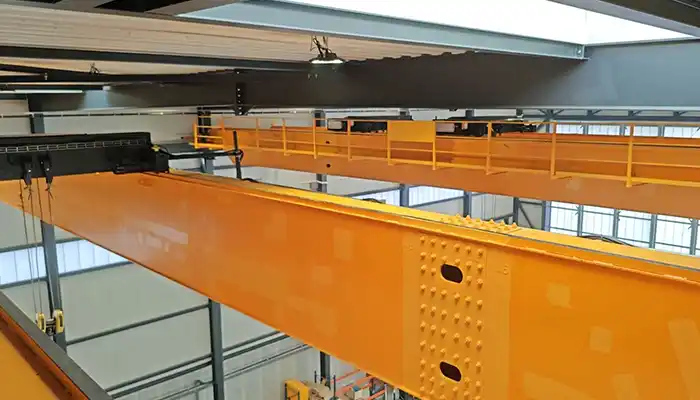
Increase Lifting Height Without Workshop Rebuild
menu_open
Content Quick Link
Most Important Takeaway
Increasing lifting height in an existing workshop is not a civil construction issue. In most industrial cases, the limitation comes from how the crane system consumes vertical space. The practical solution is found in low headroom crane systems, low profile crane configurations, and optimized hoist and trolley design, which together improve usable hook travel without changing the building structure.
In simple terms, the workshop height usually already exists. The problem is how much of that height is actually usable once the crane is installed.
- Lifting height can be improved without expanding or rebuilding the workshop structure through optimized low headroom overhead crane systems and better internal crane layout design
- Low headroom crane systems significantly reduce hook-to-beam distance, allowing more of the building height to be used for actual lifting operations
- Hoist and trolley design directly affects usable vertical lifting space, especially in low headroom hoist crane configurations where compact structure is essential
- Runway beam positioning and compact crane components improve clearance efficiency and help recover lost lifting height in existing workshops
- Proper system selection—choosing between low profile crane, low clearance crane, or standard overhead crane solutions—helps avoid unnecessary and expensive factory reconstruction while maintaining production continuity
Questions This Guide Solves
How can lifting height be increased without rebuilding a workshop?
In most existing factories, increasing lifting height does not require changing the building structure. Instead, it depends on improving how the crane system uses the available vertical space inside the workshop.
- Use low headroom crane systems to reduce hook-to-beam distance
- Optimize hoist and trolley design to recover lost vertical travel
- Adjust runway beam height where structural conditions allow
- Reduce unnecessary structural depth in crane components
- Improve compact layout of lifting mechanisms
In practice, these methods allow factories to improve usable lifting height while keeping the workshop layout unchanged and avoiding civil reconstruction work.
What crane designs improve hook travel in low ceiling factories?
Low ceiling workshops require crane systems that minimize non-working vertical height. Standard cranes often waste space between the hook and roof, so specialized designs are used.
- Low profile crane systems for compact vertical structure
- Low headroom overhead crane for indoor production workshops
- Side-mounted hoist layouts to reduce hook-to-beam distance
- Compact trolley and end carriage systems for space efficiency
These configurations are commonly used in steel workshops, fabrication plants, and assembly lines where ceiling height is fixed.
What is the role of low headroom overhead crane systems in space optimization?
A low headroom overhead crane system is designed to maximize usable hook height within an existing building envelope. The focus is not on increasing crane capacity, but on improving vertical space efficiency.
- Converts more building height into usable lifting height
- Reduces wasted clearance between crane and roof structure
- Improves stacking and vertical handling capability
- Works well in retrofit factories with fixed structures
This makes it a practical solution for workshops where production cannot be interrupted for structural modification.
Can hoist selection affect lifting height performance?
Yes. Hoist selection has a direct impact on lifting height, especially in low headroom hoist crane systems.
- European-style wire rope hoists reduce overall headroom
- Compact hoist bodies improve hook upper position
- Integrated hoist-trolley systems minimize vertical loss
- Poor hoist design can significantly reduce usable lifting height
In many factories, upgrading only the hoist system already improves lifting efficiency without changing the crane bridge.
Is civil construction necessary to improve crane lifting efficiency?
In most cases, civil construction is not required. Lifting height issues are often solved through crane optimization rather than structural rebuilding.
- No need for roof modification in most retrofit cases
- Crane system upgrades can be done while maintaining production
- Structural changes are costly and time-consuming
- Equipment-based solutions provide faster implementation
Civil work is usually only considered when structural limits cannot support any crane optimization.
What are practical alternatives to workshop expansion for vertical clearance issues?
When workshop expansion is not possible, several practical crane-based solutions are commonly used.
- Install low headroom crane systems to maximize hook travel
- Upgrade to low profile crane designs for compact vertical structure
- Optimize hoist, trolley, and girder configurations
- Adjust runway beam height within safe structural limits
- Replace overhead crane with gantry systems in open areas
These approaches allow factories to improve lifting performance without changing the building footprint or interrupting production for long periods.
 Limited space of industrial workshops - Types of low built hoists and crane systems
Introduction: The Limitation in Industrial Workshops
Most production workshops do not fail because of lifting capacity. The bottleneck is usually vertical space. The building stays the same, but production keeps changing—heavier parts, taller stacks, tighter scheduling. So the problem slowly shifts to one point: not enough lifting height inside an existing workshop structure. In many cases, people first think the crane is the issue. "We need a higher capacity crane" or "we need a stronger hoist." But after inspection, the situation is different. The crane can lift the weight, yet the hook cannot reach high enough, or the usable travel height is too small. That is where the limitation sits. This is common in steel workshops, fabrication shops, machinery assembly plants, and storage yards that were designed years ago. The building height is fixed. Roof beams are already in place. Modifying the structure is possible, but it usually means stopping production and spending heavily on civil work.
Where the limitation comes from inside a workshop
The loss of lifting height is usually not obvious at first glance. It is created step by step through structural and equipment layers.
- Roof trusses and building beams take away usable vertical clearance
- Standard overhead crane girder depth reduces hook travel distance
- Hoist trolley design adds extra headroom that cannot be used for lifting
- End carriage height and wheel assembly occupy lower vertical space
- Installation decisions made during original design limit future flexibility
In simple terms, the building height is not fully available for lifting work. A portion of it is "consumed" by crane structure and mechanical design.
Why this creates daily operational problems
When lifting height is limited, it does not only affect "how high you can lift." It changes how the entire workshop operates.
- Material stacking becomes restricted, especially for steel, pipes, and fabricated frames
- Assembly work slows down because components cannot be lifted directly to final position
- Loading and unloading cycles require extra handling steps
- Storage efficiency drops since vertical space cannot be fully used
- Operators often need to reposition loads multiple times before placement
A few hundred millimeters of lost hook height can decide whether a part is lifted in one move or requires multiple steps.
Why rebuilding the workshop is rarely a practical option
Technically, lifting height can be increased by raising the roof or redesigning the building structure. But in industrial projects, this is not commonly chosen.
- Civil reconstruction interrupts production for weeks or months
- Structural modification requires permits, engineering redesign, and inspection
- Costs often exceed the value of upgrading crane equipment itself
- Existing workflow, machines, and layouts must all be adjusted
Even when the idea looks simple on paper, it becomes difficult to execute in a running factory.
The practical direction used in modern crane design
Because of these limitations, modern crane engineering focuses on working within the existing workshop envelope instead of changing it.
Recover lost lifting height from crane design and installation optimization, not from building expansion.
- Reducing hook-to-beam distance through low headroom crane structure
- Using compact hoist and trolley configurations
- Adjusting runway beam positioning where possible
- Improving vertical efficiency of existing overhead crane systems
No need to touch the roof. No need to rebuild the workshop. Just using space more carefully.
Key takeaway for workshop planning
In most industrial environments, lifting height limitation is not a structural failure. It is a design mismatch between building space and crane system configuration.
Once this is understood, the solution becomes much clearer: focus on how the crane uses space, not on changing the building itself.
Why Lifting Height Is Limited
In many existing factories, lifting height issues are not caused by the crane's load capacity, but by how much vertical space is actually usable after installation. This is especially common in workshops that use a low headroom crane, a low headroom hoist crane system, or even a conventional overhead crane that was not designed for restricted clearance conditions.
At first glance, the building height looks sufficient. But once a low clearance crane setup is installed inside the workshop, the hook travel becomes smaller than expected. The difference is created by several structural and mechanical layers that gradually reduce usable lifting height.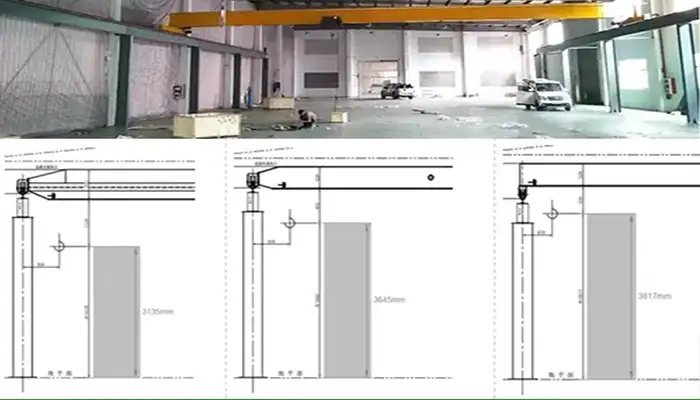
Structural roof beams and trusses reduce usable clearance in low headroom crane installations
Roof structure is always the first limitation in a low headroom crane system or any indoor overhead lifting setup. Steel trusses, purlins, and main beams occupy fixed vertical space that cannot be used for lifting operations.
- Roof trusses and beams reduce effective clearance for any low profile crane installation
- Structural depth varies depending on building span and load requirements
- Safety distance must be maintained between crane top and roof structure
- Older workshops often have additional reinforcements that further reduce usable height
In practice, even when a factory is designed for overhead lifting, the available space for a low clearance overhead crane is already partially consumed before the crane is installed.
Standard hoist-trolley systems reduce lifting height in low headroom hoist crane applications
One of the most common causes of reduced lifting height is the hoist design itself. Standard hoists are not optimized for restricted vertical space, which is why they perform poorly in comparison to a low headroom hoist crane or low profile electric hoist system.
- Traditional hoists require extra headroom above the girder
- Hook block suspension reduces effective lifting travel
- Top-running trolley design increases vertical space consumption
- Motor, drum, and gearbox layout adds unnecessary height
This is why many factories upgrade from conventional systems to a low headroom crane hoist configuration, especially when working inside compact workshops or retrofit steel structures.
Double girder crane structures increase depth compared to low profile crane systems
A double girder crane provides higher capacity, but it also increases structural depth, which directly reduces lifting height. In contrast, a low profile crane design focuses on minimizing vertical loss rather than maximizing structural mass.
- Two girders increase overall bridge height
- Top-mounted trolley requires additional clearance
- Heavier beam sections increase structural depth
- Reinforced design reduces available hook travel in limited height workshops
For this reason, many facilities with restricted ceiling height prefer a low headroom overhead crane system instead of a traditional double girder configuration when lifting height is the priority.
Improper runway beam installation reduces efficiency of low clearance crane systems
Even when using a low clearance crane or low headroom overhead traveling crane, installation quality plays a major role in final lifting height performance.
- Runway beams installed too low reduce hook travel range
- Uneven beam elevation affects crane leveling and safety clearance
- Incorrect installation forces conservative lifting limits
- Retrofit workshops often have fixed beam positions that limit optimization
In many industrial projects, the crane itself is suitable, but the runway installation prevents the system from achieving full low headroom lifting height optimization.
End carriage and wheel assemblies contribute to height loss in low profile crane design
The end carriage system is often ignored, but it also affects usable vertical space in a low profile crane system or low headroom gantry crane setup.
- Wheel assemblies require structural housing that occupies vertical space
- Bearing blocks and support frames increase end structure height
- Reinforced end carriages are necessary for load distribution
- Clearance between wheels and runway limits upward adjustment potential
In low clearance workshops, these small design elements collectively reduce effective hook height more than expected.
Overall impact of accumulated vertical space loss in low headroom crane systems
When all factors are combined, the result is a noticeable reduction in usable lifting height. This is especially critical in workshops using a low headroom crane system, where every millimeter of vertical space directly affects operational performance.
In many industrial cases:
- Roof structure consumes fixed clearance
- Hoist and trolley design reduce hook travel
- Crane girder type affects vertical efficiency
- Installation and end carriage design further reduce usable height
This is why selecting the correct low headroom hoist crane, low profile overhead crane, or low clearance crane solution is often more important than increasing crane capacity. The limitation is not the lifting ability—it is how efficiently the system uses the available vertical space.
Engineering Principle: Maximizing Hook Travel in Fixed Space
In most workshops that use a low headroom crane system, low profile crane, or low clearance overhead crane, the main design target is not just lifting capacity. The engineering focus is something more practical: how much of the building height can actually be converted into usable hook travel. Many factories ize this only after installation. The crane is working as expected, but the hook cannot reach as high as production requires. At that point, the issue is no longer "can it lift", but "how far can it lift vertically inside the same fixed space".
Core engineering idea: converting structure height into usable lifting height
At the system level, the principle is straightforward:
Increase hook lifting height = Reduce non-working vertical structure
This means every part of the crane that does not contribute to lifting should be minimized or redesigned. In a low headroom hoist crane or low clearance crane system, the goal is to reduce wasted vertical distance between the hook and the roof structure.
- Non-working height includes girder depth, trolley frame, and hoist layout
- Structural steel thickness directly affects usable hook travel
- Installation design influences how much of the workshop height is actually available
- Even small reductions in headroom create noticeable gains in lifting range
In industrial projects, this principle is often more important than increasing crane tonnage.
Compact hoist integration in low headroom crane systems
One of the most effective ways to improve lifting height is through compact hoist integration. This is widely used in modern low headroom hoist crane designs and upgraded overhead crane systems.
- Hoist and trolley are designed as a compact integrated unit
- Side-mounted or offset configurations reduce vertical stack height
- Motor and gearbox layout is optimized to minimize upward space consumption
- Hook block travel is positioned closer to the girder level
In practice, this design allows a low profile crane system to recover vertical space that would otherwise be lost in conventional hoist arrangements.
Optimized trolley positioning for low clearance crane performance
Trolley positioning has a direct impact on how efficiently a low clearance overhead crane uses available height.
- Side-running trolley layouts reduce top clearance requirements
- Load positioning closer to girder center improves stability and space use
- Reduced structural overlap between trolley and beam increases hook travel
- Balanced wheel arrangement avoids unnecessary height stacking
This is especially important in retrofit workshops where every centimeter of vertical space matters. A well-optimized trolley can make a noticeable difference in lifting performance without changing the building structure.
Reduced beam depth design in low profile crane systems
The crane girder itself is another major factor in vertical loss. In a low profile crane design, reducing beam depth is a key structural strategy.
- Optimized box girder or I-beam profiles reduce overall height
- High-strength steel allows thinner structural sections without losing rigidity
- Weight reduction improves load distribution across the runway
- Lower beam depth directly increases hook travel range
This approach is commonly used in low headroom overhead crane systems where the building height cannot be modified but lifting requirements continue to increase.
Higher runway beam placement within safe limits
Another practical method to improve lifting height is adjusting the installation level of runway beams. This is often used in low clearance crane installations during retrofit or upgrade projects.
- Raising runway beams closer to roof structure increases hook travel
- Requires careful load transfer analysis to maintain structural safety
- Must respect building column and bracket limitations
- Often combined with compact hoist systems for best effect
In many industrial upgrades, this method alone can recover enough vertical space to improve production flow without any full structural reconstruction.
Practical outcome: improving lifting height without rebuilding the workshop
When these engineering methods are combined, the result is a system optimized for existing space conditions.
- Compact hoist integration reduces unnecessary vertical loss
- Optimized trolley layout improves usable hook travel
- Reduced beam depth design increases lifting efficiency
- Higher runway positioning improves overall clearance usage
In workshop applications, this approach allows a low headroom crane system or low profile crane solution to achieve higher lifting performance within the same building envelope. No roof modification is required, and production can continue without long shutdown periods.
Core Solution 1: Low Headroom Crane Systems
In workshops where ceiling height is fixed and cannot be changed, the most direct way to improve lifting height is the use of a low headroom crane system. This type of design is built specifically for factories with limited vertical clearance, where a standard overhead crane or conventional bridge crane would waste too much usable height.
In practical terms, a low headroom overhead crane is not about increasing power or speed. It is about reworking the vertical layout so the hook can travel closer to the roof structure while still keeping safe operating clearance.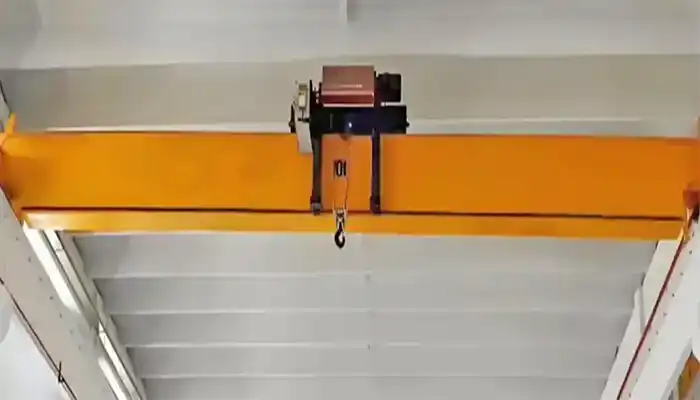 low headroom crane system - LDP series - Low headroom hoist placed on the aside of main girder
Why low headroom crane design improves lifting height
The main advantage of a low headroom hoist crane system comes from reducing the "non-working height" between the hook and the building roof. In many standard cranes, a large portion of vertical space is taken up by the hoist, trolley, and girder arrangement.
A low headroom design changes this balance.
- More of the building height is converted into usable hook travel
- Structural space above the girder is minimized
- The crane operates closer to the roof without interference
- Vertical lifting range is improved without changing workshop structure
In many retrofit factories, this is the first solution considered when lifting height becomes a bottleneck in daily operations.
Key structural features of low headroom crane systems
Side-mounted hoist configuration instead of top-running layout
- Hoist is positioned alongside the girder instead of sitting above it
- Reduces hook-to-beam distance significantly
- Improves usable lifting height in low clearance environments
- Common in modern low profile crane systems used in steel workshops and assembly lines
Compact trolley wheel arrangement
- Trolley wheels are arranged to minimize vertical stacking
- Structural frame is shortened to reduce unnecessary height
- Load distribution is maintained without increasing crane depth
- Suitable for continuous-duty industrial applications
Reduced hook-to-beam distance
- Hook block operates closer to the crane girder
- Less wasted space between lifting mechanism and structure
- Direct improvement in effective lifting height
- Particularly important in workshops with strict ceiling limitations
Applicable systems in industrial use
Low headroom overhead crane for indoor factories
- Installed inside enclosed production workshops
- Used in machining, assembly, fabrication, and maintenance areas
- Optimized for maximum lifting height under fixed roof structures
- Common upgrade option when standard overhead cranes are insufficient
Low headroom gantry crane for semi-open workshops
- Used where building columns or roof support is not suitable for overhead crane installation
- Freestanding structure allows flexible height configuration
- Suitable for yards, storage areas, and outdoor processing zones
- Often selected when workshop expansion is not possible but lifting height must be increased
Practical performance impact in workshop operations
In industrial conditions, switching to a low headroom hoist crane system can recover a noticeable portion of lost lifting height.
- Improves vertical stacking capability for steel and heavy components
- Reduces need for multi-step lifting operations
- Enhances loading and unloading efficiency
- Supports tighter workshop layouts without performance loss
The key point is simple: instead of changing the building, the crane system is adjusted to use the available height more efficiently.
Core Solution 2: Optimized Hoist and Trolley Design
In a low headroom crane system or low clearance overhead crane setup, the hoist is usually the first component that decides how much lifting height is actually available. Even when the building height is sufficient, a poorly designed hoist can take away a large portion of usable vertical travel.
This is why modern low headroom hoist crane designs focus heavily on compact hoist and trolley integration rather than only increasing lifting capacity.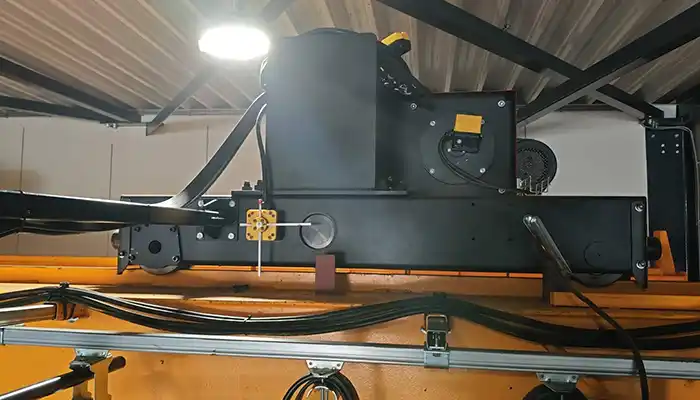
Why hoist design controls lifting height in workshops
The hoist is not just a lifting device. It defines the upper limit of hook travel. In many conventional systems, the structure above the hook consumes unnecessary space, especially in older overhead crane configurations.
- Hoist body height directly affects hook upper position
- Trolley structure adds fixed vertical loss under crane beam
- Drum, motor, and gearbox layout influence compactness
- Standard designs often leave unused roof clearance
In low ceiling factories, this becomes critical. A small difference in hoist structure height can decide whether a load can be lifted to the required position or not.
European-style electric wire rope hoists with compact body design
One of the most widely used solutions in low profile crane systems is the European-style electric wire rope hoist. It is designed specifically to reduce headroom and improve vertical lifting efficiency.
- Compact vertical layout with reduced overall hoist height
- Motor and drum arranged in a horizontal optimized structure
- Smaller hook block assembly reduces wasted space
- Suitable for modern low headroom overhead crane applications
In practical workshop use, this type of hoist allows the crane to operate closer to the girder while still maintaining stable lifting performance.
Reduced headroom trolley systems for low clearance crane applications
The trolley system also plays a major role in vertical space usage. A low clearance crane relies on a compact trolley structure to reduce unnecessary height loss.
- Side-mounted or compact trolley frame design
- Reduced wheelbase height improves hook travel range
- Optimized load distribution without increasing structural depth
- Better compatibility with restricted ceiling workshops
This type of design is commonly used in retrofit factories where installation space is fixed but lifting height still needs improvement.
Integrated hoist-and-trolley modules in modern crane systems
Instead of treating hoist and trolley as separate components, many low headroom crane systems now use integrated modules.
- Hoist and trolley combined into a compact lifting unit
- Reduced connection points lower structural height loss
- Improved mechanical alignment and load stability
- Faster installation and easier maintenance access
This integration is especially useful in production environments where downtime must be minimized during crane upgrades.
Practical performance improvements in workshop operations
When a low headroom hoist crane system is properly optimized, the improvements are visible in daily operations rather than just design calculations.
- Hook upper limit position increases without changing building height
- More usable vertical space under crane beams becomes available
- Material stacking height improves in storage and production areas
- Fewer repositioning steps during lifting operations
In many industrial cases, upgrading only the hoist and trolley system—without changing the crane bridge or workshop structure—can already solve most lifting height limitations.
Core Solution 3: Crane Girder and Structural Optimization
In a low headroom crane system or low clearance overhead crane application, the crane girder is not only a load-bearing structure. It also defines how much vertical space is lost between the hook and the workshop roof. In many factories, the girder design is one of the main reasons lifting height becomes insufficient even when the building height looks adequate on paper. For this reason, optimizing crane bridge structure is a practical method to improve usable lifting height without changing the workshop itself.
How crane girder structure affects lifting height
The bridge girder sits between the hoist system and the runway beams. Any increase in girder depth directly reduces hook travel in a low headroom hoist crane system.
- Girder depth determines how high the trolley can operate
- Structural reinforcement increases vertical space consumption
- Load capacity requirements often increase beam thickness
- Poor optimization leads to unnecessary loss of clearance
In simple terms, a heavier or over-designed girder reduces usable lifting height, even if lifting capacity is sufficient.
Single girder systems for reduced structural depth in medium loads
For many workshops, especially medium-duty production lines, a single girder crane system is often the most practical way to recover lifting height.
- Single beam structure reduces overall crane depth
- Lower self-weight compared to double girder configurations
- Easier integration with low profile crane designs
- More usable hook travel within the same workshop height
This configuration is widely used in assembly workshops, machining lines, and general fabrication areas where lifting requirements are moderate but vertical space is limited.
Box girder optimization for controlled deflection with minimal height loss
Box girder structures are often used in overhead cranes where stability and rigidity are required. However, without proper optimization, they can consume unnecessary vertical space.
In modern low clearance crane systems, box girder design is refined to balance strength and compactness.
- Optimized steel distribution reduces unnecessary beam height
- Controlled deflection design avoids over-thick structural sections
- Improved load transfer efficiency across the span
- Better compatibility with low headroom hoist arrangements
This approach allows the crane to maintain rigidity while still supporting higher usable lifting height.
Lightweight structural design to maximize vertical clearance
Another important direction in low headroom overhead crane design is reducing unnecessary structural weight while maintaining safety margins.
- High-strength steel allows thinner beam sections
- Reduced self-weight improves runway load conditions
- Compact structural geometry increases hook travel range
- Less material usage without compromising lifting performance
In practical workshop applications, this type of optimization is often used in retrofit projects where every millimeter of vertical space matters.
Where girder optimization is most effective
Crane girder and structural optimization is especially suitable for:
- Assembly workshops with medium lifting requirements
- Fabrication plants with fixed building height
- Production lines using low headroom crane systems
- Facilities upgrading from standard cranes to low profile crane solutions
In these environments, structural optimization alone can recover a meaningful portion of lost lifting height without requiring any building modification.
Practical result in industrial use
When girder design is properly optimized, the improvement is not only theoretical.
- Increased usable hook height under existing roof structure
- Better compatibility with low clearance lifting environments
- Improved efficiency in material handling and assembly operations
- Reduced need for secondary lifting or repositioning steps
In many cases, refining the crane bridge structure becomes one of the most cost-effective ways to improve lifting performance inside an existing workshop.
Core Solution 4: Runway Beam Height Optimization
In a low headroom crane system or low clearance overhead crane installation, the runway beam position is one of the most direct factors affecting final lifting height. Even when a low profile crane or optimized hoist system is used, poor runway elevation can still limit the hook's upper travel. Unlike full workshop reconstruction, runway beam optimization focuses on small but targeted structural adjustments that improve usable vertical space without interrupting production for long periods.
Why runway beam height directly affects lifting performance
The runway beam defines the operating level of the entire crane system. If it is installed lower than necessary, the crane automatically loses lifting height before any hoist optimization can take effect.
- Lower runway elevation reduces hook upper limit
- Fixed beam position determines crane bridge operating level
- Clearance between beam and roof structure becomes critical
- Even compact low headroom hoist crane systems are affected by runway height
In many workshops, this is one of the most overlooked causes of reduced lifting efficiency.
Raising runway beams closer to roof structure
One of the most effective ways to improve lifting height is to reposition the runway beams closer to the roof structure, within safe engineering limits.
- Reduces unused vertical space between crane and roof
- Increases available hook travel without changing crane equipment
- Common upgrade method in low clearance crane retrofit projects
- Must be evaluated for structural load capacity and safety clearance
In industrial environments, even a small upward adjustment can noticeably improve lifting performance, especially in compact workshops.
Re-aligning support columns where feasible
In some facilities, runway beams are supported by columns or brackets that can be adjusted or reinforced.
- Column reinforcement allows higher beam positioning
- Alignment correction improves crane travel consistency
- Helps eliminate uneven lifting height across workshop span
- Requires structural verification before modification
This approach is often used in older workshops where initial installation was not optimized for modern low headroom overhead crane requirements.
Improving load distribution to allow higher installation points
Runway height is also limited by how the building load is distributed. Better structural load management can sometimes allow higher beam installation.
- Load redistribution reduces stress concentration on support points
- Reinforced brackets enable safer elevated runway positioning
- Improved structural balancing supports low profile crane upgrades
- Enables more efficient use of existing building frame
This method is commonly applied in retrofit engineering where full reconstruction is not possible but performance improvement is required.
Where runway beam optimization is most effective
This solution is especially practical in:
- Existing factories upgrading to low headroom crane systems
- Workshops with fixed production schedules and no shutdown window
- Facilities with sufficient roof height but inefficient beam placement
- Medium-duty industrial plants using low clearance overhead cranes
In these cases, runway optimization is often combined with hoist and girder improvements for a balanced lifting height upgrade.
Practical impact in workshop conditions
When properly executed, runway beam height optimization delivers clear operational improvements:
- Increased usable hook lifting height without changing crane type
- Better vertical space utilization under existing roof structure
- Improved material handling efficiency in confined workshops
- Reduced need for multi-stage lifting operations
In many industrial upgrades, this method serves as a practical bridge between full structural reconstruction and purely equipment-based optimization.
Core Solution 5: Compact End Carriage and Wheel Systems
In a low headroom crane system or low clearance overhead crane setup, most attention is usually given to the hoist or girder. However, the end carriage and wheel assemblies also take up vertical space that directly affects the final lifting height. In many workshops, this part is not obvious at first, but it quietly contributes to the overall loss of usable hook travel.
For a low profile crane or low headroom hoist crane system, optimizing the end carriage is a practical way to recover additional clearance without changing the building structure.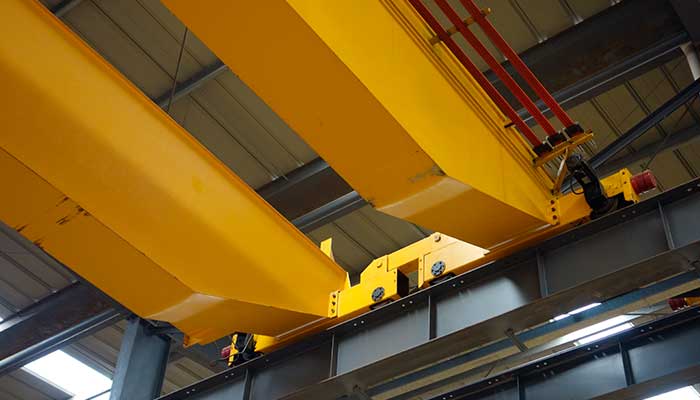
Low headroom end carriage connection with main girder - side seated end carriages
Why end carriage design affects lifting height
The end carriage sits between the crane bridge and the runway rail. It supports the entire moving system, so its structure must be strong—but strength often comes with added height.
- Wheel housing increases vertical footprint under the girder
- Bearing blocks require structural space for load transfer
- Reinforced frames add thickness to the crane ends
- Clearance limits between wheel assembly and runway affect layout
In industrial workshops, these small structural dimensions accumulate and reduce the effective lifting height of the entire crane system.
Low-profile wheel assemblies for low clearance crane systems
One of the most effective improvements is the use of compact wheel assemblies designed specifically for low clearance crane applications.
- Reduced wheel diameter while maintaining load capacity
- Compact wheel block structure lowers end carriage height
- Optimized axle positioning improves space efficiency
- Suitable for low headroom overhead crane installations in tight workshops
This design reduces unnecessary vertical stacking at both ends of the crane bridge, improving overall hook travel efficiency.
Reduced structural housing height in end carriage design
Traditional end carriages often use oversized housings for durability. However, in modern low headroom crane systems, structural optimization allows more compact configurations.
- Thinner but high-strength steel housings reduce height
- Improved fabrication techniques maintain rigidity with less material
- Streamlined geometry reduces wasted vertical space
- Better integration with low profile crane bridges
This means the crane maintains structural safety while improving usable lifting height inside the workshop.
Optimized bearing layout for compact geometry
Bearing arrangement is another important factor in end carriage design. A well-optimized layout reduces unnecessary structural depth without compromising load performance.
- Compact bearing spacing reduces housing size
- Improved load distribution allows lighter structural frames
- Reduced friction improves crane travel efficiency
- Better alignment supports smooth operation in low clearance crane systems
This optimization is especially useful in retrofit projects where runway dimensions cannot be changed.
Practical effect on lifting height in workshops
Although end carriage optimization may seem minor compared to hoist or girder changes, its combined effect becomes noticeable in operation.
- Slight increase in usable hook lifting height
- Improved clearance consistency across crane travel span
- Better compatibility with compact hoist and trolley systems
- Reduced cumulative vertical loss in full crane structure
In many low headroom crane upgrade projects, this refinement is used together with other structural improvements to maximize available lifting height without modifying the workshop building.
System Selection Strategy for Factories
Selecting the right lifting solution in a low headroom crane system or low clearance workshop environment is not only a technical decision. It is also a practical one based on how much structural change the factory can istically accept. In many industrial projects, the wrong selection leads to wasted space, while the right configuration improves lifting height without touching the building. The key is to match the crane system type—whether low headroom overhead crane, low profile crane, or gantry crane solution—with the actual workshop constraint, not the theoretical design capacity.
If ceiling height is severely limited → prioritize low headroom crane systems
When the workshop has strict vertical restrictions, the first option is always a low headroom crane system designed specifically for restricted clearance conditions.
- Suitable for low ceiling steel workshops and compact production lines
- Maximizes hook travel within fixed building height
- Uses compact hoist and trolley configuration to reduce vertical loss
- Common in retrofit factories where roof modification is not possible
In these cases, upgrading to a low headroom hoist crane is usually more effective than increasing crane capacity or changing structural beams.
If moderate modification is possible → combine hoist optimization with runway adjustment
When the workshop allows limited structural adjustment, a combined approach is often more efficient than a single solution.
- Use low profile crane hoist systems to reduce headroom loss
- Adjust runway beam height where structural conditions allow
- Optimize trolley layout for better vertical clearance
- Balance cost with achievable lifting height improvement
This hybrid strategy is widely used in medium-sized factories where production cannot stop but gradual upgrades are acceptable.
If overhead crane is inefficient → consider gantry crane replacement for flexibility
In some workshops, overhead crane systems are not the best solution due to building constraints or outdated structural design. In such cases, switching to a gantry system can be more practical.
- Independent structure avoids roof limitations
- Flexible installation height for low clearance crane operations
- Suitable for outdoor yards, semi-open workshops, and storage areas
- Easier to modify lifting height without building interference
A low headroom gantry crane or adjustable gantry system is often used when overhead runway systems cannot be optimized further.
If long-term production expansion is planned → invest in modular crane systems
For factories expecting future capacity growth, the focus should shift from short-term fixes to modular flexibility.
- Modular low headroom crane systems allow future upgrades
- Scalable runway and girder design supports higher capacity later
- Hoist systems can be replaced or upgraded without full reconstruction
- Reduces long-term dependence on civil engineering changes
This approach is common in developing industrial zones where production layouts are expected to change over time.
Practical selection principle in workshop conditions
In most industrial environments, the correct choice is not about choosing the strongest crane, but the one that fits the physical limitation of the workshop.
- Limited height → compact low headroom crane design
- Partial flexibility → combined hoist and runway optimization
- Structural restriction → gantry-based lifting system
- Future expansion → modular crane architecture
Practical outcome of correct system selection
When the system is properly matched to workshop conditions:
- Usable lifting height is maximized without structural rebuilding
- Investment in civil construction is avoided or reduced
- Production continuity is maintained during upgrades
- Crane performance aligns with actual workshop constraints
In industrial projects, correct system selection often delivers more value than increasing crane capacity alone, because it directly determines how efficiently the existing space is used.
Industrial Impact and Operational Benefits
When a workshop applies lifting height optimization through a low headroom crane system, low clearance overhead crane, or other low profile crane solutions, the results are usually felt in daily operations rather than in design drawings. The main value is not theoretical—it shows up in how smoothly materials move through the workshop. In many factories, the lifting system is already capable of handling the required load. The limitation is vertical space usage. Once that is improved, the entire workflow becomes more stable and predictable.
Eliminates need for workshop reconstruction
One of the most direct benefits is avoiding structural rebuilding. Instead of modifying roof systems or expanding building height, factories can rely on low headroom hoist crane upgrades and structural optimization.
- No roof modification or steel structure redesign required
- Avoids complex civil engineering approval processes
- Keeps existing workshop layout intact
- Reduces dependency on external construction contractors
In practical terms, production does not need to stop for long construction periods, which is often the main concern in active facilities.
Increases usable vertical workspace instantly
A well-designed low headroom crane system or optimized hoist configuration immediately improves how much vertical space is actually usable.
- More hook travel within the same building height
- Better stacking capability for raw materials and finished goods
- Improved flexibility for tall or oversized components
- More efficient use of existing warehouse or workshop volume
This improvement is often noticeable immediately after installation or retrofit, without any change to the building structure.
Reduces downtime associated with civil construction
Civil modification work usually involves long shutdown periods, which directly affect production schedules. By using low clearance crane upgrades instead of structural rebuilding, downtime is significantly reduced.
- No long-term shutdown for roof or beam reconstruction
- Installation can be completed in staged or partial operation modes
- Reduced interruption to production lines
- Faster return to full operational capacity
For many factories, this is one of the most practical reasons to choose equipment-based optimization over structural changes.
Improves material handling efficiency and workflow
Once lifting height is optimized, workshop operations become more efficient and less repetitive.
- Fewer intermediate lifting steps required
- Easier vertical stacking and retrieval of materials
- Faster loading and unloading cycles
- Better coordination between lifting and production stations
In industrial environments, this reduces unnecessary handling time and helps stabilize production rhythm, especially in fabrication and assembly workshops using low profile crane systems.
Enhances return on existing facility investment
Instead of investing in building expansion, factories can extract more value from the existing structure by upgrading crane systems.
- Higher productivity without new building cost
- Better utilization of existing workshop height
- Improved output without increasing floor area
- Extended service value of current facility layout
In many cases, optimizing a low headroom overhead crane system delivers a stronger return than expanding the factory footprint, especially in urban or space-limited industrial zones.
Practical outcome in workshop operations
When all improvements are combined, the impact is clear in daily production:
- More efficient vertical space usage
- Reduced operational delays in lifting tasks
- Better workflow consistency across production stages
- Lower overall infrastructure investment pressure
In industrial practice, lifting height optimization is not just a mechanical adjustment. It becomes a practical method to increase workshop productivity without changing the building itself.
Conclusion: Engineering Efficiency Over Structural Expansion
Increasing lifting height inside an existing workshop is not mainly a construction problem. In most cases, it is a crane system design problem. The building already exists, the production line is already running, and stopping everything for structural modification is usually not practical. So the focus shifts to how efficiently the crane uses the available space. A properly designed low headroom crane system, combined with optimized hoist selection and refined structural layout, allows factories to recover lost lifting height without touching the roof or rebuilding the workshop. The improvement comes from reducing unnecessary vertical structure inside the crane itself, not from changing the building.
Practical direction in industrial applications
In many workshop upgrades, the most effective results come from a combination of engineering adjustments rather than a single change.
- Low headroom overhead crane configurations reduce hook-to-beam distance
- Compact hoist and trolley systems improve usable lifting range
- Structural optimization of girder and end carriage reduces vertical loss
- Runway adjustments fine-tune final lifting height within safety limits
These methods work together to improve vertical performance while keeping the original workshop structure intact.
Why crane optimization is often preferred over rebuilding
In industrial planning, rebuilding a workshop is rarely the first choice when lifting height is insufficient. It introduces cost, time, and operational interruption.
With comparison, upgrading to a low clearance crane system or improving an existing low profile crane layout is more controlled and easier to implement.
- No need for full civil reconstruction or roof redesign
- Shorter installation and modification time
- Lower disruption to ongoing production
- Better use of existing capital investment
The workshop continues operating while improvements are made around it, which is often the key requirement in active production environments.
Final practical insight
In industrial practice, lifting height problems are rarely solved by making buildings taller. They are solved by making crane systems more efficient in how they use space.
When a factory applies low headroom crane technology, optimized hoist systems, and compact structural design, it is essentially converting unused structural space into working lifting height.
This approach keeps investment focused on equipment rather than construction, while maintaining production continuity and improving long-term operational stability.

Article by Bella ,who has been in the hoist and crane field since 2016. Bella provides overhead crane & gantry crane consultation services for clients who need a customized overhead travelling crane solution.Contact her to get free consultation.